Source bionic floating popper fishing lures for saltwater, offshore, and beach fishing
Compare 30 bionic floating popper fishing lures from verified suppliers. View specs for ABS and PVC models targeting species like tuna, sea bass, and cod with prices ranging from 0.31 to 4.96 USD.
Key considerations
Products List








Comprehensive Sourcing Guide
Strategic Sourcing Guide for Bionic Floating Popper Fishing Lures
The global market for artificial fishing tackle continues to expand, with bionic floating popper lures representing a high-demand segment for both recreational and commercial anglers. These lures are engineered to mimic the surface activity of distressed prey, creating a "pop" sound and splash that triggers aggressive strikes from predatory fish. For procurement professionals and B2B buyers, sourcing these items requires a nuanced understanding of material composition, dimensional specifications, and the specific operational environments where they perform best. This guide synthesizes available product data to provide a disciplined framework for evaluating suppliers and defining procurement requirements for this specific category of fishing gear.
Technical Specifications and Material Composition
The foundation of a successful popper lure lies in its physical construction and material integrity. Based on current market data, the primary materials utilized for these lures include ABS Plastic and PVC. ABS (Acrylonitrile Butadiene Styrene) is frequently cited as the standard for hard bait construction due to its durability and ability to maintain a consistent shape under impact. The presence of PVC in some listings suggests alternative manufacturing approaches, though buyers must verify the specific polymer grade to ensure resistance to UV degradation and saltwater corrosion.
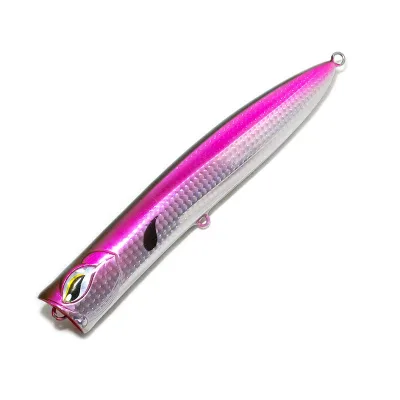
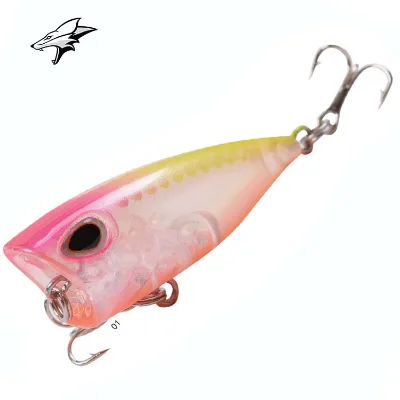
Dimensional consistency is critical for the hydrodynamic performance of a popper. The observed product data indicates a wide variance in size specifications, ranging from compact models of 4cm to larger, more substantial units measuring 19cm or 190mm. This variation directly correlates with the target species and fishing technique. For instance, the 19cm model, weighing approximately 58.7g, is designed for larger saltwater applications, whereas smaller variants weighing as little as 3g or 15.8g are suited for freshwater or smaller predatory species. The single package dimensions for larger units are typically recorded around 21x5x5 cm, a factor that significantly impacts logistics and shipping costs.
The weight of the lure is another pivotal specification. Listings show weights ranging from 3 grams to 58.7 grams, with intermediate options like 8/13 grams and 10 grams. This weight distribution affects the casting distance and the depth of the lure's action. A heavier lure generally offers better casting distance and wind resistance, which is essential for offshore or big game fishing scenarios. Conversely, lighter lures are preferred for delicate presentations in calm waters or for species with lighter mouths.
Operational Applications and Target Species
Understanding the intended application environment is essential for matching the correct lure to the buyer's market. The product attributes clearly delineate two primary operational zones: ocean-based fishing and freshwater or general application fishing. For ocean environments, the lures are specifically noted for use in Ocean Beach Fishing, Ocean Boat Fishing, Ocean Rock Fishing, and general Saltwater Fishing. These contexts often involve rougher water conditions and larger target species.
The target species data provides a comprehensive list of potential customers for these lures. The observed attributes include Saltwater Fish, Zander, Cod, Salmon, Sea Bass, and Tuna. This indicates that the product line is versatile enough to support a broad range of fishing styles, from deep diving and off-shore trolling to big game fishing. The "Floating Water" action is a key feature, confirming that these lures are designed to stay on the surface, creating the necessary disturbance to attract top-water predators.
In addition to saltwater applications, the data also references freshwater targets such as Bass, Walleye, Trout, and Catfish. This dual capability suggests that a single supplier may offer a unified product line capable of serving diverse market segments. The fishing techniques associated with these lures include Float Fishing, Pole Fishing, Handline Fishing, Lure Fishing, and Sea Fishing. Buyers should ensure that the lures they source are compatible with the specific techniques their end-users employ, as the hydrodynamic profile of a popper designed for handline fishing may differ from one designed for rod-and-reel casting.
Cost Drivers and Pricing Dynamics
The pricing structure for bionic floating popper lures is influenced by several variables, including material costs, production complexity, and order volume. The observed price range in the market spans from $0.31 to $4.96 USD. This significant variance suggests that price is not solely a function of the lure's size but also of the customization level, material quality, and packaging requirements.
Minimum Order Quantity (MOQ) is a critical cost driver in this sector. The data indicates an MOQ range from 2 units to 3000 units. This wide range allows for flexibility, enabling buyers to test the market with small orders or commit to large-scale procurement for established distribution channels. However, buyers must be aware that lower unit prices are typically associated with higher MOQs. The "Selling Units" are listed as single items, which implies that the pricing is per individual lure, but bulk packaging (such as cartons) is standard for larger orders.
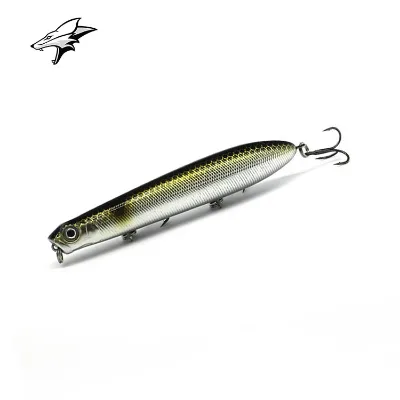
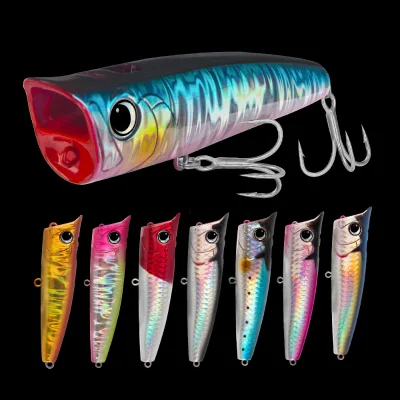
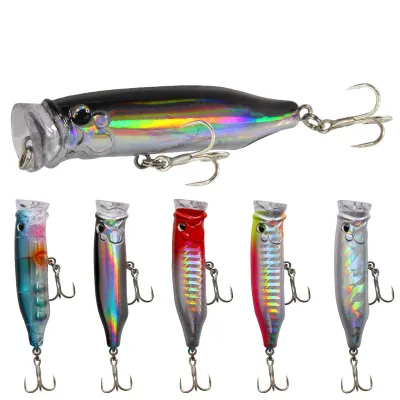
Customization is another factor that influences cost. The product attributes confirm that customization is available, including color options like Pink, Silver Back Yellow, Silver Back Black Belly Red, and fully customized color schemes. Custom molds, specific color matching, or unique packaging requirements will inevitably increase the unit cost and may extend lead times. Buyers should factor these potential premiums into their total cost of ownership calculations when negotiating with suppliers.
Supplier Evaluation and Verification Protocols
When evaluating potential suppliers for bionic floating popper lures, buyers must prioritize transparency and adherence to the provided product facts. The data indicates that the origin of these products is China, a major hub for fishing tackle manufacturing. While this location offers competitive pricing, it necessitates rigorous due diligence regarding quality control and supply chain reliability.
Buyers should verify the specific model numbers associated with the products they intend to purchase. The observed data lists several distinct model numbers, including MH407, 10023, 10024, 10068, 10055, and 10042. Each model corresponds to specific dimensions and weights, such as the 10023 model with a 7/9cm length or the 10042 model with a 9.7cm length. Ensuring that the supplier can consistently deliver these specific model specifications is crucial for maintaining product consistency.
Furthermore, the "Condition" of the product is listed as "Printed," which refers to the visual finish of the lure. Buyers should request samples to verify the quality of the printing, ensuring that the colors are vibrant and the paint application is durable. The "Hooks" attribute is listed as "Without Hooks," which is a standard configuration for many popper lures, requiring the buyer to source hooks separately or verify if the supplier offers hook installation as an additional service.
Quality Control and Compliance Considerations
Quality control in the fishing lure industry involves verifying that the physical attributes of the product match the stated specifications. Buyers should implement a sampling protocol to check for dimensional accuracy, particularly the length and weight, which directly affect the lure's performance. For example, a lure specified as 19cm should be measured to ensure it falls within an acceptable tolerance range, as deviations can alter the "pop" action and casting distance.
Material integrity is another key area of focus. Since the materials are listed as ABS Plastic and PVC, buyers should verify that the plastic used is free from defects such as bubbles, cracks, or uneven surfaces. The "Single Gross Weight" of 0.080 kg for certain packages provides a benchmark for checking packaging consistency, ensuring that the lures are not under-filled or over-packed.
While specific certification standards are not explicitly detailed in the provided product data, buyers should inquire about compliance with international safety and environmental standards. Given that these lures are often used in marine environments, the materials should be non-toxic and resistant to corrosion. Buyers should also verify the "Delivery" attribute, which is described as "Fast," to ensure that the supplier can meet the required lead times without compromising quality.
Long-Term Procurement and Inventory Management
Sourcing bionic floating popper lures requires a strategic approach to inventory management, given the wide range of sizes and colors available. The "Capacity" attribute notes that "Different Types of Fishing Lures Available," suggesting that suppliers may offer a broad catalog. Buyers should assess their specific market needs to avoid overstocking less popular variants while ensuring adequate inventory of high-demand models.
The "Customization" feature offers a long-term advantage for buyers looking to differentiate their product lines. By working with suppliers to develop unique color schemes or packaging, buyers can create a distinct brand identity. However, this requires careful planning to manage the increased complexity of the supply chain.
Finally, buyers should consider the "Location" of the product, which is listed as "Sea." This implies that the lures are designed for saltwater environments, which can be more corrosive than freshwater. Buyers should ensure that the packaging and storage conditions protect the lures from humidity and salt exposure during transit and storage. By maintaining a disciplined approach to specification verification and supplier evaluation, buyers can secure a reliable supply of high-quality bionic floating popper lures that meet the demands of their customers.
FAQs
What materials are used for bionic floating popper fishing lures?
These lures are primarily constructed from ABS Plastic or PVC. ABS is preferred for its durability and ability to maintain shape under impact, while PVC offers an alternative manufacturing approach that requires verification for UV resistance and saltwater corrosion.
Which target species can these lures catch in saltwater environments?
The lures are designed to target Saltwater Fish, Zander, Cod, Salmon, Sea Bass, and Tuna. They are specifically engineered for ocean beach, boat, and rock fishing scenarios where these predatory species are commonly found.
How does the weight of the lure affect its fishing performance?
Weights range from 3 grams to 58.7 grams, influencing casting distance and wind resistance. Heavier lures like the 58.7g model are better for offshore big game fishing, while lighter options suit delicate presentations for smaller species.
Can buyers request customization for these fishing lures?
Yes, customization is available for color schemes and potentially other attributes. Buyers can choose from standard options like Pink or Silver Back Yellow, or request fully customized colors to differentiate their product lines in the market.
What is the typical price range for these artificial hard baits?
The observed price range spans from 0.31 to 4.96 USD per unit. This variance depends on factors such as material quality, specific model dimensions, customization levels, and the minimum order quantity required by the supplier.
Where are these bionic floating popper lures manufactured?
The product origin is listed as China, a major hub for fishing tackle manufacturing. Buyers should verify the specific factory location and ensure quality control measures are in place to maintain consistency with the stated specifications.
What are the standard dimensions for the larger popper models?
Larger models measure approximately 19cm or 190mm in length and weigh around 58.7 grams. The single package size for these units is typically 21x5x5 cm, which impacts logistics and shipping cost calculations for bulk orders.